
Human beings are, by nature, cultural beings. Culture encompasses the values, knowledge, norms, and practices that enable people to recognize themselves as members of a community. This gives rise to a fundamental question: What does integration really mean? Does it mean assimilation, homogenization, or rather creating new forms of coexistence through encounter?
For decades, this question has fueled the debate between multiculturalism and interculturality. While multiculturalism advocates for the respectful coexistence of diverse cultures, interculturality emphasizes dialogue and mutual learning, promoting a creative exchange that transforms individuals without requiring them to lose their own identity.
In Veritatis Gaudium, Pope Francis takes this reflection a step further by proposing a transcultural perspective. It is not simply a matter of coexistence or dialogue, but of discovering the harmony that emerges from the encounter between differences, making possible a new reality born from the richness of all cultures.
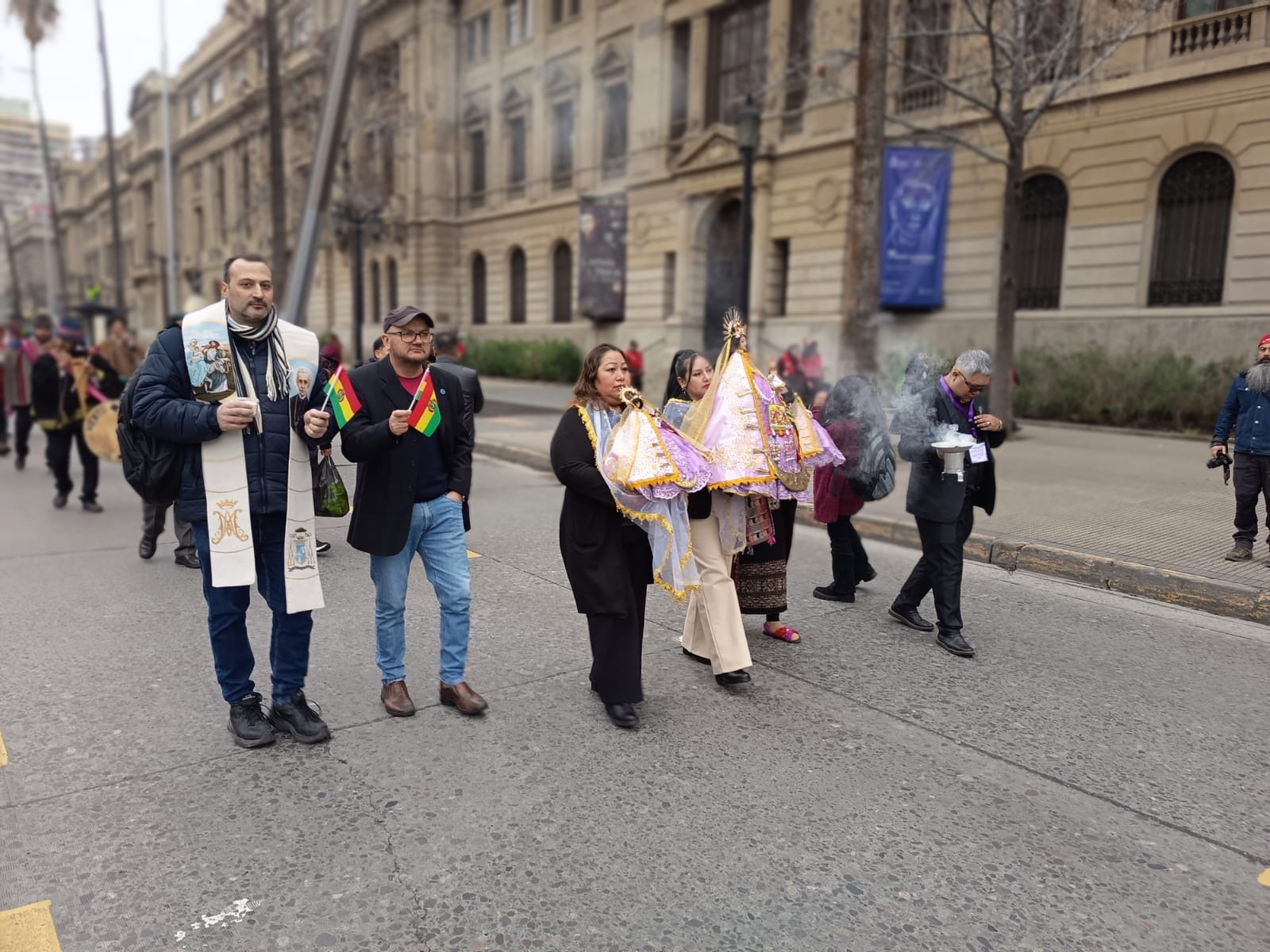
A concrete example of this process can be found in Santiago, Chile, through the mission of the Missionaries of St. Charles – Scalabrinians.
The Latin American Parish of Santiago, established within the pastoral ministry of the Scalabrinian Congregation, was created with the purpose of welcoming migrants from different countries across the continent. To achieve this goal and foster genuine integration, it has been essential to provide spaces where migrants can also express their faith and culture.
In this context, Our Lady of Pompeii Parish became recognized as a place where migrant communities could preserve and celebrate their most authentic rites, traditions, and devotions, always with the support of the Scalabrinian missionaries.
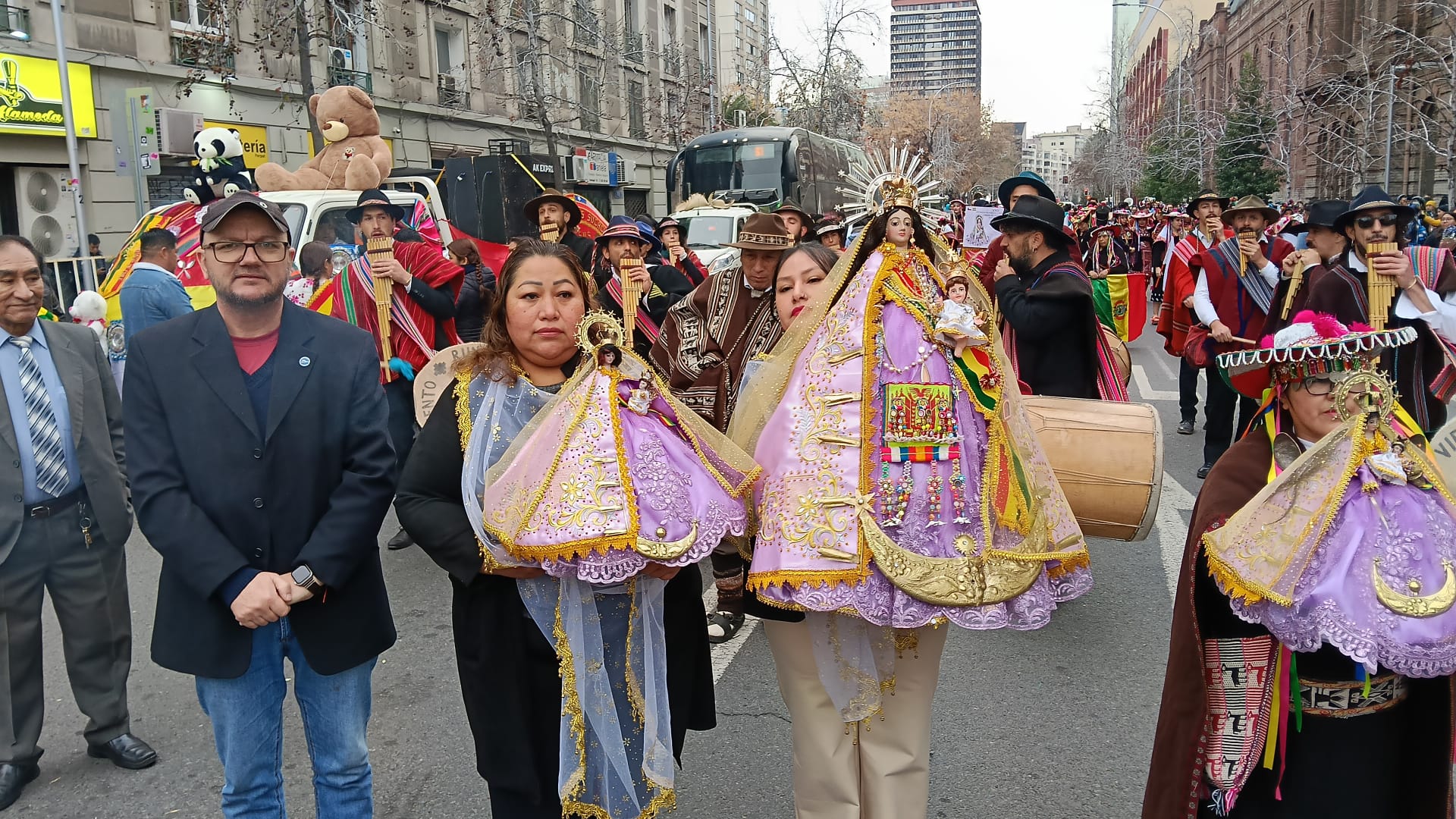
Among the many initiatives developed over the years, the experience of the Bolivian community deserves special recognition.
An essential dimension of the devotional life of migrant communities is the expression of their collective identity. Through the celebration of their patronal feast, the distinctive characteristics of each community—both those related to their nationality and their regional origins—find a privileged opportunity to become visible and appreciated within the host society.
However, the celebration honoring Our Lady of Copacabana, the patroness of Bolivia, has become something even greater for the Bolivian community—and, together with it, for the Scalabrinian mission in Chile.
It is not simply a festival that showcases the richness of Andean culture, although it certainly does that as well. Above all, it demonstrates what happens when cultures truly encounter one another.
What began in the early 2000s as a celebration held within the parish grounds has evolved into a major event for the entire city of Santiago. For approximately the past four years, the Bolivian community has been the only group granted permission to reserve Alameda Avenue, Santiago’s main thoroughfare, on the first Saturday of August for nearly eight hours. One can only imagine the impact this has on the city’s traffic.
During those hours, something extraordinary takes place. Approximately 5,000 people participate in organizing and carrying out the celebration, processing through the city while dancing and playing music dressed in traditional Bolivian attire. For the participants, however, this is not merely a parade; it is a genuine religious and cultural procession—the deepest expression of their identity.
Perhaps the most remarkable aspect is that these fraternities are composed not only of Bolivians, but also of Peruvians, Chileans, and people from many other countries. In this way, the Feast of Our Lady of Copacabana becomes a true space of encounter among peoples and cultures that, through their interaction, give birth to something new.
Its cultural impact on the country is profound: a transcultural encounter that, in turn, generates a new culture—the culture of fraternity and peace.
It is precisely from this new reality that the Congregation of the Missionaries of St. Charles – Scalabrinians seeks to continue building bridges of fraternity.
Marco Strona