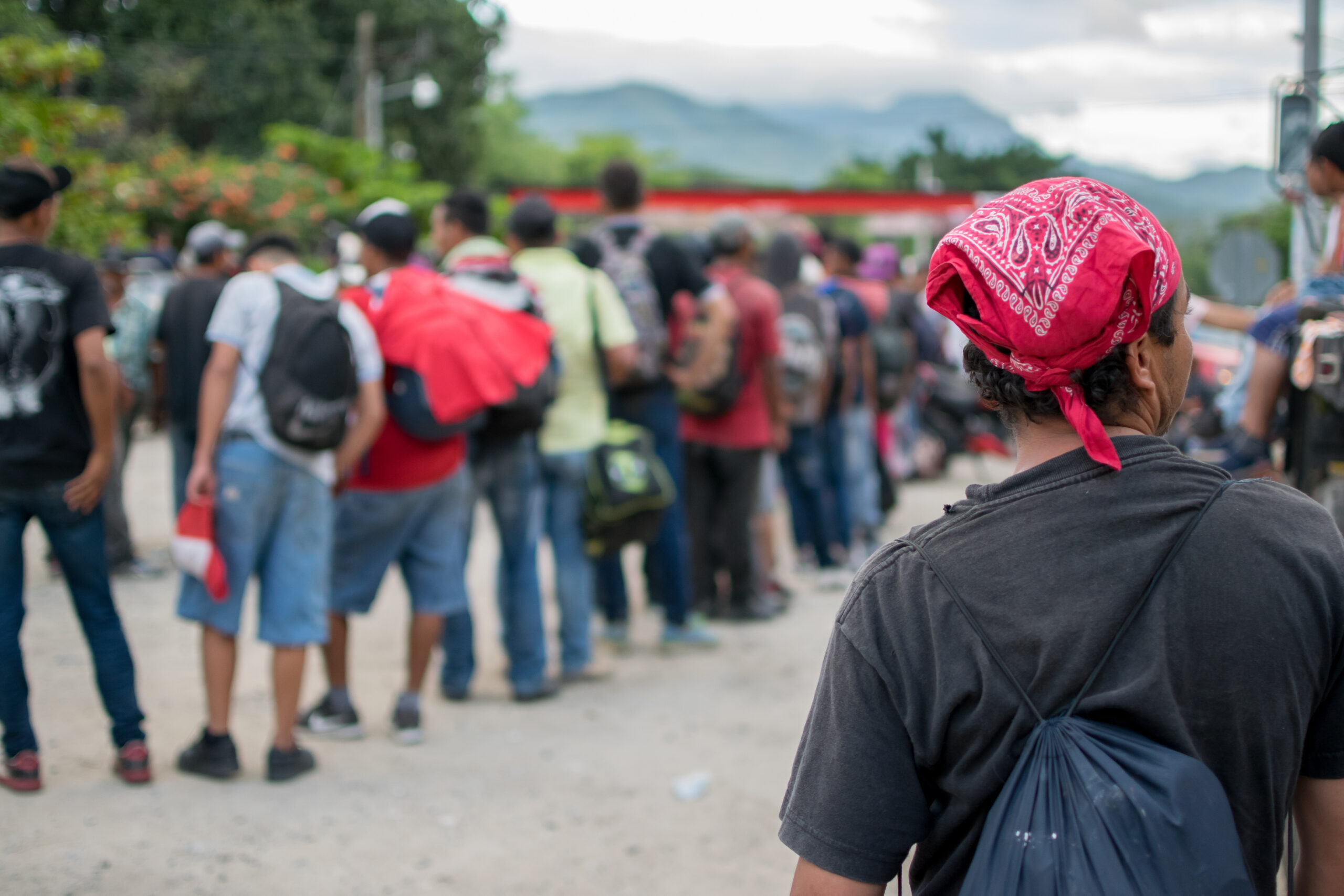
Human mobility in Latin America and the Caribbean is undergoing profound transformations. According to the report Regional Mobility Trends: Latin America and the Caribbean (January–June 2026), prepared by the International Organization for Migration (IOM), regional migration systems are evolving from massive flows predominantly directed northward toward increasingly fragmented, multidirectional, circular, and intraregional mobility patterns.
Among the IOM’s key findings is a 97% decrease in movements through the Darién Gap compared with the first half of 2024, as well as significant reductions in irregular migration flows observed in Honduras and Guatemala. However, the international organization warns that this does not mean a decline in human mobility, but rather a transformation in its characteristics, including an increase in return movements, circular mobility, temporary settlement, and intraregional migration.
The report also notes that the Andean corridor continues to be one of the main areas of regional mobility, while Brazil and Uruguay are consolidating their roles as destinations for long-term settlement and integration for migrants from different countries across the region. The IOM also observes the persistence of extra-continental migration, particularly among people from Asia and Africa, as well as ongoing challenges related to protection, reintegration, and the risks migrants face throughout their journeys.
In response to these emerging migration realities, the Scalabrini International Migration Network (SIMN) and the Congregation of the Missionaries of Saint Charles – Scalabrinians continue their ongoing and intensive work of accompaniment, welcoming, protection, research, training, and advocacy across the diverse migration contexts of Latin America and the Caribbean. This work is inspired by the charism of Saint John Baptist Scalabrini and by the promotion of genuine Ethical Governance of Human Mobility, grounded in human dignity, solidarity, fraternity, and human rights.
For SIMN, the trends identified by the IOM confirm that migration is a structural phenomenon of our time and that migrants must be recognized as rights holders, agents of development, and bearers of hope for our societies.
Therefore, we call upon governments, international organizations, churches, academia, and civil society organizations to redouble their efforts to provide comprehensive support to migrants and their families. From a Scalabrinian perspective, every response must be grounded in welcoming, protecting, promoting, and integrating migrants, building more inclusive communities and strengthening a true Culture of Ethical Migration Governance oriented toward the common good, social justice, and peace.
“Human Mobility, Dignity and Hope: Towards Ethical Governance for a World on the Move.”
PHG/AUGUST 2026